What a personal development coach for teens and young adults focuses on
Ask ten people what a personal development coach does and you will get ten answers, most of them vague. The term covers everything in the range between executive leadership work and habit tracking apps with a human attached, which is why the search results are so unhelpful when you are a 22 year old trying to figure out why your life feels stalled.
For teens and young adults, the work is narrower and more concrete than the industry language suggests. A personal development coach helps you see your own patterns clearly, decide what you want that is genuinely yours rather than inherited, and build the daily behavior that moves you there. Sessions deal with real material: a class you keep skipping, a friendship you have outgrown, an application you have not opened in three weeks.
This post covers what these coaches work on, how the role differs from life coaching and therapy, what changes when the client is 16 versus 24, and how to tell which kind of support fits your situation.
In case you are new here, we are Jeffrey, therapist, and Rebekah, life coach. We run Healing Harmony Counseling, a young adult coaching practice for 13 to 25 year olds who are capable, often overthinking, and stuck somewhere between who they were told to be and who they suspect they are.
What does a personal development coach do?
The work has three parts that repeat in a loop: seeing yourself accurately, choosing a direction, and building the habits that get you there. Most people arrive strong in one of these and weak in the others. Someone can have exceptional self-awareness and no follow-through, or relentless discipline pointed at a goal they never chose for themselves.
Self-awareness: naming patterns before changing them
Early sessions are mostly observation. What do you avoid. When do you overcommit. Which situations reliably produce the feeling that you have failed. Coaches ask about the specifics rather than the summary, because patterns hide inside details. A student who says they are bad at time management may find, after two weeks of tracking, that they lose four hours every day between the end of class and dinner, and nowhere else.
Naming a pattern precisely is often the intervention. Once you can see that you say yes to everything in the moment and resent it by Thursday, you have something to work with. Before that, it feels like being tired all the time.
Goals and habits: turning intention into a schedule
Most people set goals that are wishes with a verb attached. Get in shape. Be more social. Take school seriously. None of these tells you what to do on Tuesday at 4pm. A coach converts them into behavior with a time attached, then shrinks the behavior until it is small enough that skipping it would be strange.
The second half of this work is designing for the bad weeks. Systems that only run when you feel motivated are not systems. That means deciding in advance what the minimum version looks like when you are sick, overwhelmed, or three days behind, so the whole structure does not collapse the first time life interferes.
The 80/20 rule: finding the few changes that carry the rest
A small number of changes usually account for most of the improvement. For young adults it is almost always sleep, one anchor time in the day, and reducing the number of open commitments. Fixing a consistent wake time frequently improves mood, attendance, and eating without any of those being addressed directly.
Good coaching is aggressive about finding those few levers and ignoring the rest for a while. The temptation is to build an elaborate system covering every area of life at once, which feels productive for about ten days and then collapses under its own weight.
What is the difference between a personal development coach and a life coach?
Mostly branding. Both help clients set goals and change habits. The term personal development tends to emphasize internal growth like confidence, mindset, and self-knowledge, while life coaching more often signals practical logistics. In practice the same person does both, and the label tells you more about their marketing than their method.
Overlap: where the two are the same job
When a coach works with a 19 year old, the internal and the practical are inseparable. You cannot fix a class attendance problem without touching the belief that they are not smart enough to be there. You cannot build confidence in the abstract while every week produces new evidence of things going badly.
What matters more than the title is specialization by age and situation. A coach who works primarily with mid career professionals brings assumptions that do not transfer to a college sophomore, starting with the assumption that the client chose their current circumstances.
Credentials: what ICF certification does and does not prove
The International Coaching Federation is the closest thing coaching has to a standard body. ICF credentials require documented training hours, supervised coaching experience, and an exam. That tells you the coach has been taught a method and practiced it under observation, which is worth something in an unregulated field.
It does not tell you they are good with teenagers, or that they know when a client needs a therapist instead. Certification is a floor rather than a recommendation. Ask directly who they work with, how long, and what they do when something clinical shows up in a session.

What does personal development coaching focus on for teens and young adults?
The content shifts because the developmental tasks are different. A 35 year old is usually optimizing an established life. A 19 year old is building one from scratch while being told constantly that these are the years that determine everything.
Identity: figuring out what you want when everyone has an opinion
By 18, most young people have absorbed a set of expectations they never examined. A major chosen because a parent lit up when they mentioned it. A career path that seemed safe. A version of success measured entirely by other people's approval.
Coaching creates space to separate what is genuinely theirs from what was handed to them. This is uncomfortable work, and it is why some clients arrive with a career question and spend the first month on something else entirely.
It matters especially for young people who grew up between countries, where the expectations come from more than one direction and do not agree with each other. Our post on the cultural identity crisis in third culture teens covers what that looks like from the inside, and what parents tend to misread as moodiness.
Confidence: the difference between skill and self-belief
Many capable young adults have a specific gap: they can do the thing, and they do not believe they can. They interpret good results as luck and bad results as proof. Adding more skills does not close that gap, since the problem is not competence.
For some young women, that pattern has a diagnostic explanation nobody looked for. Years of compensating quietly, high achievement paired with private chaos, and a constant sense of running at twice the effort of everyone else are common in the signs of ADHD in adult women, and they get mistaken for a confidence problem for years.
Independence: the skills nobody teaches before you need them
Then there is the unglamorous material. Making a doctor's appointment. Reading a lease. Understanding a paycheck. Handling a disagreement with a roommate without either apologizing immediately or letting it fester for four months.
Young adults are often embarrassed to admit they do not know these things, which keeps them from asking anyone. A coach is a low stakes place to learn from them.
It sounds minor next to identity work, and it produces some of the fastest changes in how competent a person feels. A 21 year old who has handled one difficult phone call on their own approaches the next one differently.
Whose version of your life have you been trying to build?
A number of the young adults we work with are doing well by every external measure and feel almost nothing about it. They picked the major that made sense. They took the job people congratulated them for. Somewhere in there they stopped asking what they wanted, because the question felt indulgent next to everything they were supposed to be grateful for.
That question does not get easier by waiting. It tends to arrive anyway, usually at 26 or 29, with more attached to the answer than there is at 21. If nobody was watching and no one would be disappointed, what would you pick? Start that conversation with us.
*AI Disclosure: This content may contain sections generated with AI with the purpose of providing you with condensed helpful and relevant content, however all personal opinions are 100% human made as well as the blog post structure, outline and key takeaways.
* Blog Disclaimer: Please note that reading our blog does not replace any mental health therapy or medical advice. Read our mental health blog disclaimer here.

Hello, we are Jeffrey & Rebekah
Therapists and life coaches at Healing Harmony. We specialize in supporting multicultural families and Third Culture Kids (TCKs) through transitions and emotional challenges, fostering resilience and cultural identity.
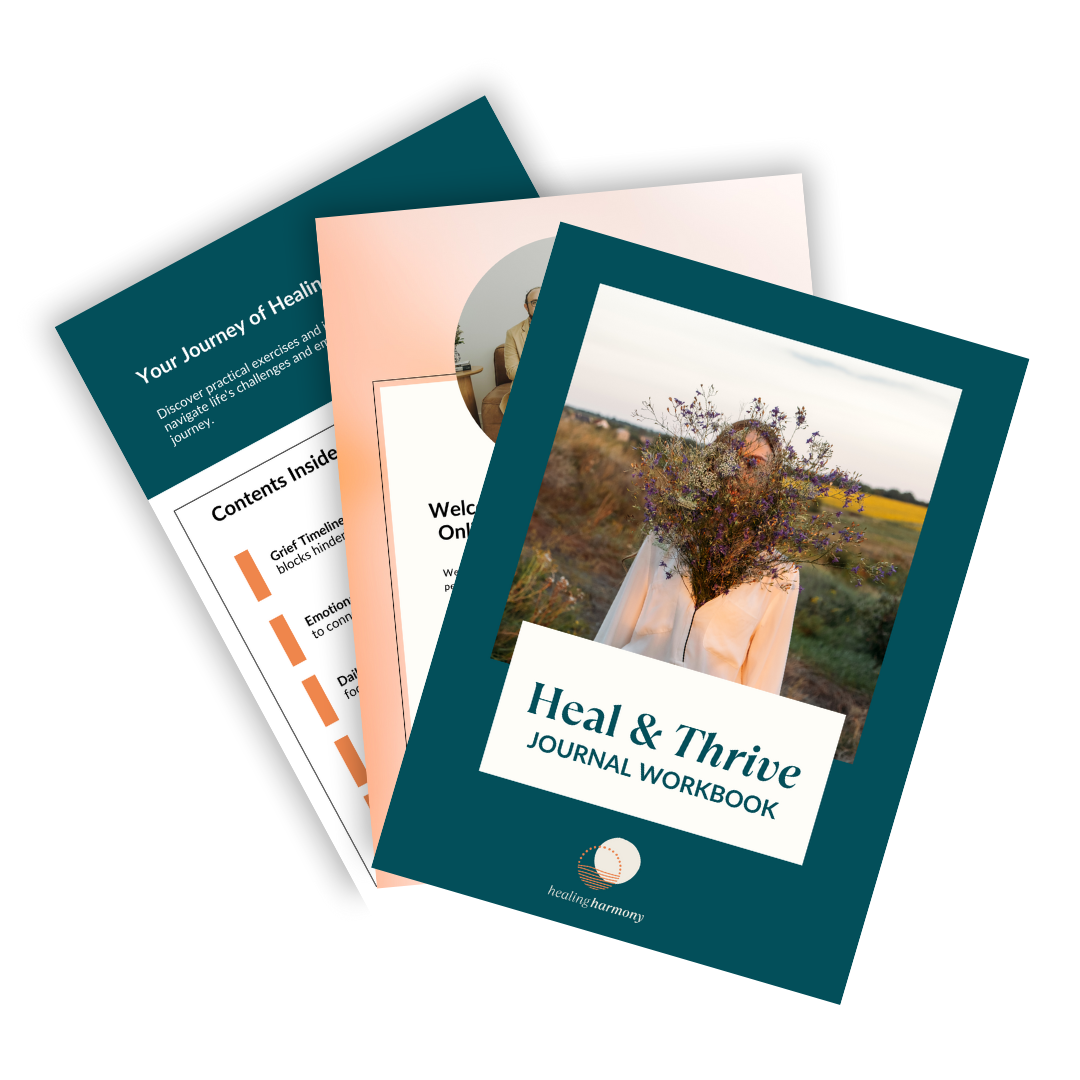
Download your FREE life journal