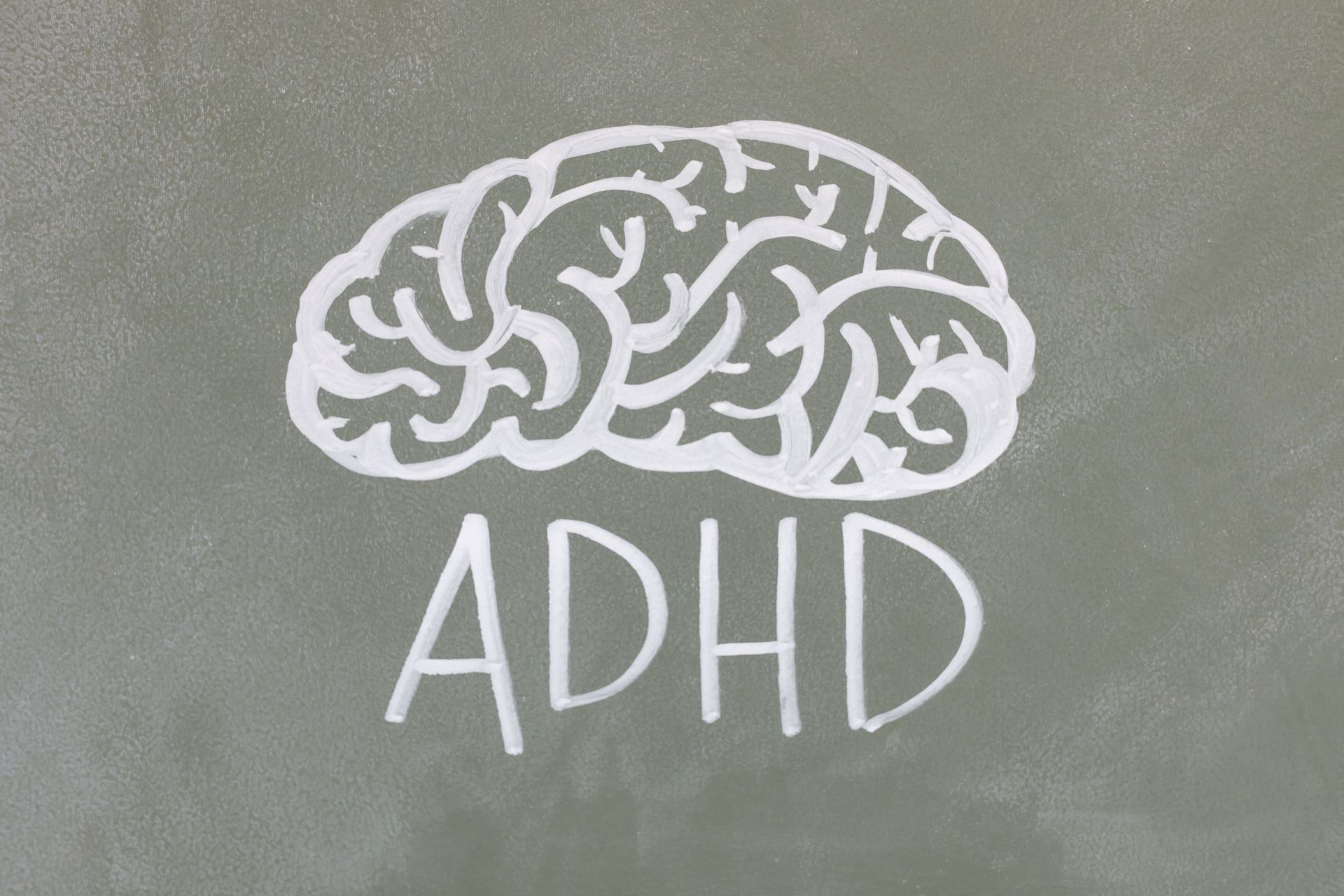

ADHD Symptoms in Women: Why So Many Cases Go Undiagnosed Until Adulthood
If you have spent most of your life being told you are too sensitive, too disorganized, too emotional, or simply not trying hard enough, and if you have spent years wondering why everything feels just a little harder for you than it seems to for everyone else, there is something important you deserve to know. You are not too much. You are not broken. You may simply have an ADHD brain that has never been recognized for what it actually is.
ADHD symptoms in women are real, they are significant, and they are missed at an alarming rate. The research is clear: women are diagnosed with ADHD far less frequently than men, far later in life, and far more often after years of being misdiagnosed with anxiety, depression, or mood disorders. The cost of that delay is not abstract. It shows up in careers derailed, relationships strained, self-worth eroded, and an exhaustion that comes from spending decades trying to compensate for a neurological difference that nobody ever named.
In case you are new here, we are Jeffrey and Rebekah, and we support young adults, people with ADHD, and Third Culture Kids. You can visit therapists and life coaches and our ADHD therapy page to learn more about how we work.
What are the symptoms of ADHD in women?
Attention that slips away without warning
For women with ADHD, difficulty sustaining attention does not usually look like obvious distraction. It looks like reading the same paragraph four times and retaining nothing. It looks like sitting in a meeting and suddenly realizing you have no idea what was just said, even though you were looking directly at the speaker. It looks like starting a task with genuine intention and finding yourself, twenty minutes later, doing something completely different with no memory of how you got there.
What makes this particularly confusing is that it coexists with hyperfocus, the capacity to become completely absorbed in something that genuinely captures your interest. Women with ADHD can spend six hours on a creative project without looking up, then struggle to spend six minutes on an email they need to send. This inconsistency is one of the things that makes ADHD so easy to dismiss. From the outside, it looks like you can pay attention when you want to. From the inside, it feels like your attention is not entirely yours to direct.
Executive function difficulties that look like personal failure
Executive function is the set of cognitive skills that allow you to plan, organize, initiate, and follow through, and it is one of the areas most consistently affected by ADHD. For women, executive function difficulties are often the most privately devastating symptom, because they tend to be interpreted not as a neurological challenge but as a character flaw.
This looks like having a clear intention to do something and still not being able to start it. Not because you are afraid of it, not because you do not care about it, but because the part of your brain responsible for generating the initiating signal is not cooperating. Time blindness is another executive function symptom that is particularly common and particularly misunderstood. Women with ADHD often exist in two states: now and not now. Time that is not immediately present does not feel real in the way it does for neurotypical people.
Emotional dysregulation, the symptom nobody talks about enough
Emotional dysregulation is one of the most significant and most underrecognized symptoms of ADHD in women, and it deserves far more attention than it typically receives in standard ADHD education. Women with ADHD often experience emotions that are faster, bigger, and harder to regulate than those of their neurotypical peers. Not more dramatic. Not more immature. Neurologically more intense and more difficult to bring back down.
Rejection sensitivity, the experience of perceived criticism or social rejection as genuinely painful in a way that feels overwhelming, is one of the most common and least discussed features of ADHD, and it affects women particularly significantly. A small piece of critical feedback, a friend who seems quieter than usual, a text that goes unanswered, these things can land with a weight that feels completely out of proportion. This is not a personality issue. It is a direct neurological feature of ADHD.
Chronic disorganization and the chaos beneath the surface
Many women with ADHD develop enough external structure to appear organized from the outside, while living in a state of genuine internal chaos. The desk looks fine. The calendar is color-coded. But the mental landscape is a different story entirely. Things get lost, not just physically, but mentally. Important information slips out of working memory at exactly the wrong moment. Systems that work beautifully for a week collapse under any change in routine.
Restlessness that lives in the mind, not the body
For women with ADHD, hyperactivity far more commonly shows up as internal restlessness, a mind that is always moving, always generating, always spinning forward to the next thought before the current one has landed. Women with ADHD often describe feeling like they cannot access quiet, like their brain does not have an off switch, and like stillness is something that happens to other people but not to them.
The ADHD tax
Beyond the individual symptoms, there is something worth naming that does not appear on any diagnostic checklist but that almost every woman with ADHD recognizes immediately: the ADHD tax. This is the cumulative cost of living with an unaccommodated ADHD brain, the late fees from forgotten bills, the time lost to disorganization, the energy spent managing symptoms that nobody else seems to need to manage, the relationships strained by patterns that made no sense until now. The ADHD tax is real, and it is heavy. But it is also not permanent.
Why ADHD in women goes undiagnosed for so long
Masking and the cost of appearing fine
Masking is the process of suppressing or concealing ADHD symptoms to appear more neurotypical, and girls become skilled at it very early. They watch their peers carefully. They develop compensatory strategies. They work harder to appear on top of things than they actually are. They learn to perform competently even when the internal experience is one of constant effort and quiet panic. By the time many women reach a diagnosis, they have been masking for so long that they sometimes struggle to recognize their own symptoms.
Can ADHD in women be mistaken for anxiety or depression?
Consistently, and this is one of the most consequential patterns in the misdiagnosis of ADHD in women. The internal experience of unmanaged ADHD is genuinely distressing. Chronic disorganization, missed deadlines, relational friction, exhaustion, and years of self-criticism create real anxiety and real low mood. When a woman describes these symptoms to a clinician, she is far more likely to receive a diagnosis of anxiety or depression than to be assessed for ADHD. The problem is that treating anxiety or depression without addressing the underlying ADHD tends to produce incomplete results.
You have always been working harder than anyone knew
If there is one thing we want every woman who reads this to take away, it is this: the struggle was never a character flaw. It was never laziness, or weakness, or a lack of trying. It was a brain doing its best in a world that was not designed for it, without the framework to understand why everything felt so hard, and without the support that would have made such a profound difference.
If you are ready to stop white-knuckling your way through and start building something that actually works for your brain, we would love to hear from you. We offer online ADHD therapy for women across Texas and therapy in Dallas. Reach out today and take the first step toward finally understanding, and genuinely embracing, the brain you have always had.

*AI Disclosure: This content may contain sections generated with AI with the purpose of providing you with condensed helpful and relevant content, however all personal opinions are 100% human made as well as the blog post structure, outline and key takeaways.
* Blog Disclaimer: Please note that reading our blog does not replace any mental health therapy or medical advice. Read our mental health blog disclaimer here.

Hello, we are Jeffrey & Rebekah
Therapists and life coaches at Healing Harmony. We specialize in supporting multicultural families and Third Culture Kids (TCKs) through transitions and emotional challenges, fostering resilience and cultural identity.
Download your FREE life journal